Age 19 + No Prior Record + Sloppy Lawyers = Death Sentence

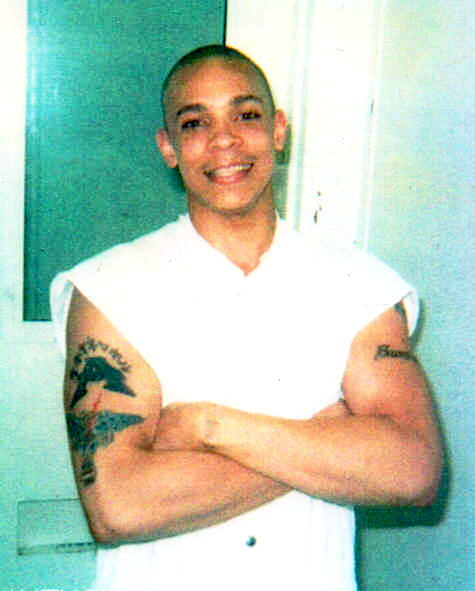
Anthony Hayes
Anthony Haynes, a 19-year-old at the time of the crime with no prior criminal history, is scheduled to be executed in Texas on October 18.

As noted in this space previously, there were serious issues of racial bias in his case (African American defendant, 11 white jurors, judge cleaning guns during jury selection). There were also bad lawyers and a possibly coerced confession. Despite this, the state of Texas is prepared to put this man to death for a crime he committed as a teenager under the influence of crystal meth.

2 days before Haynes fatally shot Kent Kincaid, an off-duty police officer, a friend of the family had given him crystal meth. It was Haynes' 1st experience with the drug. The same friend wrote in a sworn statement that during those 2 days Haynes began "talking crazy," saying he had been unable to sleep for days and thought someone was following him. When Sergeant Kincaid approached Haynes' car, Haynes' drug-induced paranoia really kicked in - he believed he would be dragged from the car. He shot and killed Officer Kincaid.

A doctor who specializes in psychiatry concluded in 2005 that Haynes' actions that night were inconsistent with previous behavior and his diminished capacity was due to his first-time use of meth. The jury never heard that Haynes had used crystal meth prior to the shooting.

Sloppy Lawyers

Predicting "future dangerousness" is a prerequisite for Texas death sentences, and Anthony Haynes' lawyer failed to offer a strong challenge to the state's weak case for his future dangerousness. Without the violence inducing effects of meth, there was little to suggest Haynes would be an ongoing threat.

Haynes has no previous criminal record. More than 3 dozen friends and family offered to testify about Haynes' good character and against the claim that Haynes would be a future threat to society. Yet Haynes' defense lawyer refused most offers of testimony and failed to even interview many family members.


Source: Brian Evans, blog, Amnesty International USA, October 5, 2012

Most viewed (Last 7 days)

Kansas AG urges governor to deny clemency to 8 sentenced to death

TOPEKA — Attorney General Kris Kobach on Tuesday urged the governor to deny clemency to Kansas inmates who have been sentenced to death. Eight of nine people sentenced to death in Kansas formally filed clemency requests in May, according to a press release from the Attorney General’s Office. Kobach urged Gov. Laura Kelly to reject them.

Gov. Mike DeWine calls for Ohio to abolish the death penalty

COLUMBUS, Ohio (WCMH) — Gov. Mike DeWine Tuesday morning called on Ohio to abolish the death penalty, citing data that he said proves it is no longer a deterrent to violent crime. “For the state to take a human life, there must, in my opinion, there must be evidence that in doing so it will help protect the public, that the threat of that action will deter someone from committing murder,” DeWine said. “I do not believe that argument today can be successfully made.” DeWine cited data showing a decline in the last four decades of executions being carried out and an increase in the time inmates spend on death row.

I watched Ohio's last execution. Here's what it was like

As Gov. DeWine calls for Ohio to end capital punishment, the state’s last execution remains the one I witnessed in 2018 Inside Ohio's death house, there is a room for executions and separate witness rooms: one for those connected to the victim and another for those connected to the inmate. Windows separate the death chamber from those watching, the condemned from the living. I was there on July 18, 2018 – during Ohio’s most recent execution. Robert Van Hook was put to death that day for killing David Self in 1985. He sat on death row for three decades. I was one of three media witnesses to the execution.

20 Minutes to Death: Witness to the Last Execution in France

The following document is a firsthand account of the final moments of Hamida Djandoubi, a convicted murderer executed by guillotine at Marseille’s Baumettes Prison on September 10, 1977. The record—dated September 9—was written by Monique Mabelly, a judge appointed by the state to witness the proceedings. Djandoubi’s execution would ultimately be the last carried out in France before capital punishment was abolished in 1981. At the time, President Valéry Giscard d'Estaing—who had publicly voiced his "deep aversion to the death penalty" prior to his election—rejected Djandoubi’s appeal for clemency. Choosing to let "justice take its course," the President allowed the execution to proceed, just as he had in two previous cases during his term:   Christian Ranucci , executed on July 28, 1976 and Jérôme Carrein , executed on June 23, 1977. Hamida Djandoubi , a Tunisian national, was sentenced to death for killing his former lover, Elisabeth Bousquet. He was execu...

SCOTUS: Alabama can’t execute Jeffery Lee by nitrogen; Thursday execution called off

After a week of legal volleyball, Alabama death row inmate Jeffery Lee’s execution—scheduled for Thursday evening—was called off after federal courts called the state’s nitrogen gas execution method “likely unconstitutional.” The state took the fight to the U.S. Supreme Court, hoping Lee could still be put to death tonight.  In an order issued at 8:10 p.m., the U.S. Supreme Court ordered that it would not lift a ban on Alabama executing Lee via nitrogen . In a short court order, the justices denied Alabama’s motion to go ahead with the execution.  Associate Justices Clarence Thomas, Samuel Alito, and Neil Gorsuch would have granted the appeal and let the execution proceed, according to the order. 

New Mississippi billboard warns criminals: ‘Firing squad is legal’

DESOTO COUNTY, Miss. (WREG) — A billboard standing on Interstate 55 southbound as you cross the Tennessee state line and enter Mississippi from Memphis is sending a grim message to those coming into the state. DeSoto County District Attorney Matthew Barton recently announced the new billboard campaign, which features the sign reading, “WELCOME TO MISSISSIPPI. WHERE THE FIRING SQUAD IS LEGAL. THINK TWICE.” It references Mississippi’s law permitting execution by firing squad under certain circumstances for inmates sentenced to death. Barton says this campaign is aimed at deterring violent crime and sends a direct message to criminals entering Mississippi.

With nitrogen gas blocked, Alabama seeks to execute inmate by lethal injection

Jeffery Lee, who successfully challenged his scheduled Thursday execution by nitrogen gas, argued that execution by firing squad would be less painful. The Alabama Attorney General’s Office Friday sought to put an Alabama death row inmate to death by lethal injection a day after the U.S. Supreme Court rebuffed the state’s attempt to execute him by nitrogen gas. In a filing with the Alabama Supreme Court Friday afternoon, the state sought an expedited motion to set a new execution date for Jeffery Lee, 49. The state said that with a permanent injunction in place against nitrogen gas, the method by which the state intended to execute Lee on Thursday, it could execute him by lethal injection or the electric chair.

Alabama | Judge bars nitrogen gas execution, says method is unconstitutionally cruel

MONTGOMERY, Ala. -- A federal judge on Tuesday permanently blocked Alabama from executing an inmate with nitrogen gas after declaring it violates the ban on cruel and unusual punishment. U.S. District Judge Emily Marks issued the ruling hours after an appeals court reversed her initial finding that the method was constitutional. Marks permanently enjoined the state from executing Jeffrey Lee, 49, by nitrogen gas. He was scheduled to be executed Thursday. The decision, for now, blocks the use of the controversial new execution method that the state has championed since 2024, but the issue will likely end up before the U.S. Supreme Court.

Idaho will soon turn to firing squad executions. Police will pull the triggers

Trained members of Idaho law enforcement with demonstrated firearms proficiency are expected to fill slots for carrying out the death penalty by firing squad as the state prison system transitions to the controversial execution method next month.  Six volunteers certified for no less than three years apiece through Peace Officer Standards and Training, or POST, will be recruited to ensure the Idaho Department of Correction is ready to comply with a state law that prioritizes shooting prisoners to death over lethal injection starting July 1.  No one on the team may have faced disciplinary action over firearms, use of force, or related conduct over the prior year, according to new execution protocols the prison system released this week. 

Thomas, Alito and Gorsuch wanted an execution that a Trump judge deemed illegal

The Supreme Court these days is generally in the business of helping executions go forward. But on Thursday night, the court did something notable: It told Alabama no. Even then, the court wasn't unanimous. Justices Clarence Thomas, Samuel Alito and Neil Gorsuch dissented from the refusal to let the nitrogen gas execution of Jeffery Lee proceed. What prompted the rare rejection? In line with the typical shadow docket practice, the court didn't explain itself. Nor did the dissenters, who merely noted their disagreement. But a deeper look at the case helps us understand why a majority of the court was unwilling to help the state this time.