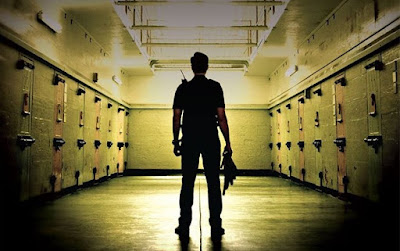
4000 visit executed Bali 9 member Myuran Sukumaran’s exhibition at Campbelltown Arts Centre in first week

Another Day In Paradise: "The interest has been so strong that staff
have to order two reprints of the exhibition program."
CLOSE to 4000 people have visited the Myuran Sukumaran: Another Day in Paradise exhibition in its first week of opening at Campbelltown Arts Centre.

The interest has been so strong that staff have had to order two reprints of the exhibition program and the show will also open on Australia Day so more people have the chance to visit.

Campbelltown Arts Centre director Michael Dagostino, who co-curated the exhibition with Sukumaran’s mentor Ben Quilty, said he was humbled by the attention and the show had attracted high interest from interstate and overseas.

The exhibition features dramatic self portraits painted by Bali Nine member Sukumaran, who was executed in Indonesia in 2015.

Sukumaran found a passion for art and painted the portraits, including a series featuring each Bali Nine member, while incarcerated in Bali’s Kerobokan Jail and from his final incarceration on Nusa Kambangan Island.

The exhibition is part of the Sydney Festival and will be on show at the arts centre until March 26.

Sukumaran’s paintings break the heart


If Campbelltown Arts Centre director Michael Dagostino wanted a thought-provoking exhibition to challenge perceptions and beliefs, he has succeeded a hundred-fold with Another Day in Paradise, featuring the works of executed Bali Nine drug smuggler Myuran Sukumaran.

Curated by Dagastino and artist Ben Quilty for the Sydney Festival, the first major exhibition of works by Sukumaran commands attention and provokes a reaction from the first glance.

Sukumaran was 34 when he was executed by firing squad on the prison island of Nusa Kambangan with fellow drug smuggler Andrew Chan, 32, ten years after his arrest in 2005.

But he speaks from the grave through the exhibition at the arts centre and it is an unsettling and emotional experience.

My sympathy for the plight of Sukumaran and Chan was tempered with the fact that the young men were caught peddling heroin, the cause of so much death and destruction locally and globally.

But through his series of striking self-portraits, Sukumaran offers an insight into his long incarceration, his efforts to change and grow up, his sorrow, his guilt, and his redemption.

The Bali Nine, young, naive Australians probably thinking about fast cash with little or no thought to the consequences of their actions, have paid dearly for their crimes.

It is hard to view the self-portraits, particularly the pieces Sukumaran painted in the final 72 hours of his life, without tears.

This rehabilitated young man, who in the most horrible of conditions in the Indonesian penal system somehow managed to turn his life around and help his fellow inmates, was deprived of his second chance.

He wasn’t asking for forgiveness, just to live.

Sukumaran’s story is harsh, raw and devastating.

His earlier work reflects hope and optimism, his later pieces are darker, stark and desperate as time runs out.

The exhibition reflects the futility of his death, the power of art to provoke change and a strong anti-death penalty and anti-drug message.

To anyone who may be attracted to the idea of quick money through smuggling drugs, think again. Here the consequences are laid bare.

To Dagostino, Sukumaran’s friend and mentor Quilty, and Campbelltown Council, congratulations on this excellent world-first exhibition. Human rights and rehabilitation are indeed at its core, highlighting how art can heal even in the most harshest of circumstances.

But don’t take my word for it. Go and see it for yourself.

Source: Daily Telegraph, January 23-24, 2017

⚑ | Report an error, an omission, a typo; suggest a story or a new angle to an existing story; submit a piece, a comment; recommend a resource; contact the webmaster, contact us: deathpenaltynews@gmail.com.


Opposed to Capital Punishment? Help us keep this blog up and running! DONATE!
Most viewed (Last 7 days)

California | Becerra vows to extend moratorium despite past support for capital punishment

SACRAMENTO—Democrat Xavier Becerra defended the death penalty while serving as California’s attorney general, a punishment his office actively sought in the case of a gunman convicted of an Orange County mass shooting, but as the front-running candidate for governor, he has vowed to block executions if elected in November. Becerra said he will extend the blanket reprieve for all death row inmates that Gov. Gavin Newsom enacted by executive order in 2019, saying he supported “moving our state away from a costly, flawed system that disproportionately impacts Black and brown communities and too often gets it wrong.”

Iran | Afghan Citizen Executed in Wheelchair Due to Severe Mobility Disability

KABUL, AFGHANISTAN – Iranian authorities have reportedly executed an Afghan citizen, identified as Valijan Nourzay, at the central prison in Rafsanjan, according to the human rights organization Hengaw. Hengaw said in a statement on Sunday, September 6, that Nourzay was executed early Wednesday last week at Rafsanjan Central Prison. According to the organization, Nourzay had a severe mobility disability and was executed while in a wheelchair. Hengaw, citing informed sources, reported that Nourzay had been pursued by Iranian authorities three years ago over an alleged murder. He was reportedly seriously wounded after Iranian security forces opened fire on him in Rafsanjan before being arrested and later sentenced to death.

Egypt TV presenter and 11 others sentenced to death in major drugs case

Egyptian television presenter Sarah Khalifa and 11 others have been sentenced to death by hanging after being convicted of drug trafficking and rape, while nine defendants received life sentences and seven were acquitted. Egyptian television presenter Sarah Khalifa, 39, has been sentenced to death by hanging along with 11 other defendants after being found guilty in a drugs case involving a criminal gang accused of importing ingredients used to manufacture narcotics for sale.

He Spent 27 Years on Death Row as a Wrongfully Convicted Man. What Comes Next?

23-hour solitary confinement. 115-degree heat. Jimmie Duncan is haunted by the decades he spent in Louisiana’s Angola Prison—and how, even after being released, he still isn’t truly free. Jimmie “Chris” Duncan wiped the sweat off his forehead as he assessed his temporary home from the parking lot of a rundown motel in central Louisiana. Sure, there’s drug dealing and prostitution, he said on a recent summer afternoon. And he suspected his neighbors were cooking meth on a floor below the room he paid $350 a week to rent.

California | He spent 19 years on death row. His conversion to Judaism helped him endure

Johnny Morales struggled to find sleep. He dozed off for a few moments, but officers came to his death row cell and woke him a little after midnight. They needed to inventory and box up his belongings. He was leaving San Quentin.  Hands cuffed behind his back, he walked across the empty upper yard in the dim gray hours before daylight. An officer walked alongside him step for step, black latex-gloved fingers holding onto Morales’s arm. For almost 20 years, Morales could only experience the world outside his 4-by-11 foot cell in the condemned housing unit like this—chained and escorted by officers. Security protocols required all death row residents be handcuffed or shackled any time they were out in open space with staff.

Ex-corrections officials urge governor to commute Kansas death sentences

Former Kansas corrections officials are urging Governor Laura Kelly to grant clemency to the state's death row inmates. Former Kansas Corrections Secretary Roger Werholtz has several reasons why he thinks the state should abolish the death penalty. Werholtz, who served as secretary from 2002 to 2010 and returned on an interim basis in 2019, uses his discussions with peers and family members of victims as well as experiences of seeing wrongly convicted people getting exonerated as his guiding points.

Florida executes Harold Gene Lucas

Florida state officials executed 74-year-old Harold Gene Lucas by lethal injection on Tuesday evening, concluding a 50-year legal saga stemming from the 1976 murder of a 16-year-old girl in Bonita Springs. STARKE, Fla. -- A man convicted of killing a teenage girl who rejected his romantic advances and wounding two of her friends was put to death Tuesday in the first of three executions planned this month in Florida. Harold Gene Lucas, 74, was pronounced dead at 6:18 p.m. following a three-drug injection at Florida State Prison near Starke, authorities said. He was sentenced to death for the 1976 shooting attack on Jill Piper and the wounding of her friends, Richard Byrd Jr. and Terri Rice.

Florida set to carry out 14th execution this year in the nation's busiest death chamber

MIAMI (AP) — A Florida man convicted of fatally shooting a 16-year-old girl who rejected his romantic advances and wounding two of her friends is set to be executed Tuesday in the first of three lethal injections scheduled this month in the state. Harold Gene Lucas, 74, is set to receive a three-drug injection at Florida State Prison near Starke starting at 6 p.m. He would be the 14th prisoner put to death this year in Florida, and Republican Gov. Ron DeSantis has already signed death warrants for two more executions set for later this September.

Arizona AG seeks execution date for man convicted in 1995 trooper killing

Trooper Bob Martin was killed during a traffic stop on the Beeline highway; execution for his killer could be as soon as January PHOENIX (AZFamily)—The Arizona Attorney General is asking for an execution date to be set for a man convicted in the killing of an Arizona State Trooper over 30 years ago. On Aug. 15, 1995, Trooper Bob Martin was shot and killed while performing a traffic stop along the Beeline Highway.

Hanging, confinement and the sentencing debate India won’t have

Ask anybody what a “death sentence” in India actually means, and the honest answer is that it can mean three quite different things. It can mean the noose—hanging by the neck until death; it can mean permanent confinement in jail—a term the courts now call imprisonment for the remainder of one’s natural life, and, far more often than either of the first two, it can simply mean delay in delivery of justice—a death sentence that is neither carried out nor commuted, waiting for completion of investigation, trial before the sessions court, hearing of a confirmation proceeding in a high court, appeal against conviction in the Supreme Court, or hearing of a mercy petition nobody has decided for years, sometimes for decades, until age or illness does what the state never got around to doing itself.