06/08/08

EU Presidency regarding the reintroduction of the death penalty in Liberia


The European Union expresses its deepest concern following the promulgation in Liberia of a law reintroducing the death penalty for certain crimes.

It notes that Liberia abolished the death penalty for all crimes in 2005. In signing the second Optional Protocol to the International Covenant on Civil and Political Rights in September 2005, Liberia committed itself to taking all the necessary measures with a view to abolishing the death penalty.

Such a decision to reintroduce the death penalty is an extremely disturbing signal which runs counter to the trend observed for many years in Africa and in the world as a whole.

The European Union reaffirms its opposition to the use of the death penalty under all circumstances. It considers that abolition of the death penalty contributes to the enhancement of human dignity and the development of human rights. It regards the death penalty as a cruel and inhuman punishment and a violation of the right to life. It notes that there is no evidence that such a punishment is dissuasive, and that its use renders any miscarriages of justice irreversible.

The European Union urges Liberia to abide by its commitments and international human rights standards.
Attaching great importance to the fact that no executions have been carried out in that country since 2000, the European Union urges the Liberian Government and Parliament to abolish the use of the death penalty both in law and in practice.

The Candidate Countries Turkey, Croatia* and the former Yugoslav Republic of Macedonia*, the Countries of the Stabilisation and Association Process and potential candidates Albania, Bosnia and Herzegovina, Montenegro, Serbia, and the EFTA countries Iceland, Liechtenstein and Norway, members of the European Economic Area, as well as Ukraine, the Republic of Moldova, Armenia and Georgia align themselves with this declaration.

Source: French Presidency of the EU 2008
Published Wednesday, 6 August, 2008 - 16:10

Execution in Texas: US should end its pick and choose attitude towards international law


Strasbourg, 06.08.2008 - “I am most concerned by the execution of Mexican national José Medellin yesterday in Texas. Mr Medellin was not informed of his right to consular help at the time of his arrest even though the United States are legally bound to guarantee this right under the 1963 Vienna Convention on Consular Relations. This is a regrettable attitude by a country which is very vocal about its commitment to the rule of law. The judicial authorities also blatantly ignored the order by the International Court of Justice to stay the execution on the grounds of the violation of the right to consular assistance. I wrote to the Texas Board of pardons and paroles in July, asking for a stay of the execution, but my appeal has been disregarded in the same way as the calls from the Mexican government, the UN Secretary General and several other governments and international organisations.

The issue at stake is not the guilt of Mr Medellin. He was found guilty of a particularly gruesome crime and he deserved to be punished.

The problem is the death penalty, which is rejected by a great majority of democratic and civilised countries across the world and also the pick and choose attitude of the United States of America – and its individual states - when it comes to respecting international law. The execution of Mr Medellin was therefore not only a violation of human rights and human dignity, but also an act of arrogant defiance which undermines the collective mechanisms for peace and security in the world.”

Statement by Council of Europe Secretary General Terry Davis
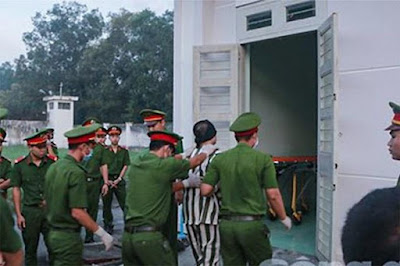
Picture: Council of Europe

Un citoyen mexicain condamné pour meurtre exécuté au Texas

José Ernesto Medellin a finalement été exécuté au Texas, mardi 5 août. Ce Mexicain de 33 ans, condamné pour le viol et le meurtre d'une adolescente, a été déclaré mort en fin de soirée par l'administration de la justice criminelle du Texas. Son exécution a eu lieu malgré l'appel du secrétaire général de l'ONU, Ban Ki-moon, à suivre les recommandations de la Cour internationale de justice (CIJ), qui avait demandé la suspension de sa peine ainsi qu'une révision de son cas et de ceux d'autres Mexicains condamnés à mort.

La Cour suprême a refusé le recours déposé par les avocats de José Medellin. La CIJ avait ordonné le 16 juillet, à Washington, la suspension de son exécution, ainsi que celle de quatre autres ressortissants mexicains, car ils n'avaient pu profiter en temps voulu d'une assistance consulaire durant la procédure judiciaire, comme le prévoit la Convention de Vienne. Par ailleurs, le Mexique s'était plaint que ses ressortissants dans le couloir de la mort n'étaient pas informés de leurs droits.

Le ministère des affaires étrangères états-unien a dit, mardi, avoir fait tout son possible pour venir en aide à José Ernesto Medellin. "C'est une situation difficile", a déclaré un porte-parole, Kurtis Cooper, qui ajoute : "Nous avons une obligation légale internationale indiscutable qui entre en contradiction avec la loi de l'Etat" texan.

Source : lemonde.fr

Mexican executed after appeal denied in Texas

WASHINGTON (CNN) -- Mexican national Jose Ernesto Medellin, whose death penalty conviction in the rape and murder of two teen girls sparked international controversy, was put to death in Texas on Tuesday night, prison officials said.

Corrections spokeswoman Michelle Lyons said Medellin died at 9:57 CT.

The U.S. Supreme Court denied the last-ditch appeal of a Mexican national on Texas' death row late Tuesday, paving the way for him to be executed for a pair of brutal slayings, state corrections officials said.

Texas Department of Criminal Justice spokeswoman Michelle Lyons said about 9:15 p.m. that the court had turned down the appeal of Jose Ernesto Medellin.

Medellin's capital appeal was an unusual one that pitted President Bush against his home state in a dispute over federal authority, local sovereignty and foreign treaties.

At issue is an international court's ruling that Medellin and about 50 other Mexicans have been illegally denied access to their home country's consul. Allowing travelers such access when they are arrested abroad is common practice.

At about 7 p.m., an hour after the execution could have taken place, a spokesman for the Texas Department of Corrections said the execution was in a "holding pattern."

The high court in March ruled for Texas, allowing the execution to proceed, but Medellin's lawyers filed a flurry of emergency appeals in state and federal courts, requesting a stay. They argued that Congress and the Texas Legislature should be given a chance to pass legislation that would give their client a new hearing before punishment is carried out.

Such a bill is pending in Congress, but no recent action has been taken in either chamber. In an August 1 letter, three Democrats on the House Judiciary Committee urged Texas Gov. Rick Perry, a Republican, to postpone executions "in order to provide Congress with the time needed to consider this situation."

Texas lawmakers will not gather in session until January.

The case centers on whether the state has to give in to a demand by the president that the prisoner be allowed new hearings and sentencing. Bush made that demand reluctantly after an international court concluded Medellin and 50 other Mexicans on American death rows were improperly denied access to their consulate upon arrest, a violation of a treaty signed by the United States decades ago.

Medellin's execution will be the first of what promises to be a busy month at the state's death chamber in Huntsville. Five other men are scheduled to die by lethal injection in the next four weeks, including one on Thursday.

Medellin was 18 when he participated in the June 1993 gang rape and murder of two Harris County girls, Jennifer Ertman, 14, and Elizabeth Pena, 16. He was convicted of the crimes and sentenced to death.

The prisoner's lawyers argued Mexican consular officials were not able to meet with the man until after his conviction.

Thirteen Texas death row inmates from Mexico will be affected by the high court ruling. Only Oklahoma has commuted a capital inmate's sentence to life in prison in response to the international judgment.

The International Court of Justice ruled in 2004 that the United States had violated the rights of the prisoners, in part because officials and prosecutors failed to notify their home country, from which the men could have received legal and other assistance. Those judges ordered the United States to provide "review and reconsideration" of the convictions and sentences of the Mexican prisoners.

The world court again last month ordered the United States to do everything within its authority to stop Medellin's execution until his case could be further reviewed.

Based in The Hague, Netherlands, the International Court of Justice resolves disputes between nations over treaty obligations. The United States is a signatory to the 1963 Vienna Convention, which lays out rights of people detained in other nations. The appeal the Supreme Court ruled on in March turned on what role each branch of government plays to give force to international treaty obligations.

Chief Justice John Roberts wrote for a 6-3 majority that the international court's judgments cannot be forced upon individual states. The president also cannot "establish binding rules of decision that pre-empt contrary state law," he said, and the treaty itself does not specifically require states to remedy any treaty violations.

The chief justice added that the international court "is not domestic law," thereby restricting the president's power over states. "The executive's narrow and strictly limited authority to settle international claims disputes pursuant to an executive agreement cannot stretch so far as to support the current presidential memorandum" that would force Texas to conduct a new state trial, he wrote.

The Mexican government filed an appeal with the international court against the United States in January 2003, alleging violations of international law. Medellin filed his own federal and state appeals based on similar complaints, as well as a claim of ineffective counsel. Medellin has the support of the European Union and several international human rights groups.

Bush said he disagreed with the international court's conclusions, but agreed to comply with them. In a February 28, 2005, executive order, he said, "The United States will discharge its international obligations ... by having state courts give effect to the decision in accordance with general principles of comity in cases filed by the 51 Mexican nationals addressed in that decision."

The Bush White House typically backs states in their power to carry out executions, but Justice Department officials said that in these instances, the president's power to conduct foreign policy outweighed states' interests.

The Supreme Court originally heard the Medellin case in 2005 but did not rule on the merits. It waited instead for lower courts to resolve the federalism angle before rehearing the appeal in October.

Source: CNN.com

Texas Executes Mexican Despite Objections

HOUSTON — In a case that has drawn international attention, Texas executed José E. Medellín on Tuesday night in defiance of an international court ruling and despite pleas from the Bush administration for a new hearing.

The execution came just before 10 p.m. Central time, shortly after the United States Supreme Court denied a last request for a reprieve. Protesters for and against the death penalty clamored in the rain outside the Huntsville Unit, about 70 miles north of Houston, where Mr. Medellín was executed by lethal injection.

“I’m sorry my actions caused you pain,” he said to the witnesses present. “I hope this brings you the closure that you seek. Never harbor hate.”

Gov. Rick Perry, a Republican, rejected calls from Mexico and Washington to delay the execution, citing the torture, rape and strangulation of two teenage girls in Houston 15 years ago as just cause for the death penalty.

Mr. Medellín and five other teenage boys in his street gang took part in the rape and murder of the girls, Elizabeth Pena, 16, and Jennifer Ertman, 14. The gang raped the girls for an hour, then strangled them. Their corpses were found two days later.

Two other members of the gang were also sentenced to die. Two had their sentences commuted to life in prison. The sixth, Mr. Medellín’s brother, Vernacio, is serving a 40-year sentence.

Mr. Medellín’s case has become the focal point of a dispute between Mexico and the United States over whether some Mexicans have been denied fair trials because they were never given an opportunity to talk to a consul. A 1963 treaty requires foreigners accused of crimes to be given that opportunity.

Over the last five days, Mr. Medellín’s lawyers tried to stop the execution by arguing to the Supreme Court that it should be put off until Congress had a chance to pass pending legislation that would require a review of similar cases. They argued that Mr. Medellín would be deprived of life without due process if he died before Congress acted.

But the court, in a 5-to-4 decision, said the possibility of Congressional action was too remote to justify a stay. Justice Stephen G. Breyer wrote in dissent that to permit the execution would place the United States “irremediably in violation of international law and breaks our treaty promises.”

Mexico opposes the death penalty and has used the Vienna Convention on Consular Relations to try to block the executions of Mr. Medellín and 50 other Mexicans in the United States. Moments after the execution, Mexico sent a formal diplomatic protest to Washington.

Twice in the last five years, the International Court of Justice, at the Hague, has said hearings should be held to determine if the 51 trials were fair.

Worried about fallout for Americans abroad, the State Department, the attorney general and the White House all urged Texas to delay the execution.

Source: The New York Times

Saudi Arabia: Death sentences/Flogging

SAUDI ARABIA
Edison Gonzales (m), aged 46
Rolando Manaloto Gonzales (m), aged 48
Eduardo Arcilla (m), aged 46
Victoriano Alfonso (m), aged 48] Filipino nationals
Efren Francisco Dimaun (m), aged 49
Omar Basillo (m), aged 42
Joel Sinamban (m), aged 40

Edison Gonzales, Rolando Manaloto Gonzales and Eduardo Arcilla have been sentenced to death, and Victoriano Alfonso, Efren Francisco Dimaun, Omar Basillo and Joel Sinamban have been sentenced to imprisonment and flogging, in the same case and after an unfair trial. The seven, all Filipino nationals, are appealing against their sentences.
If their appeals are rejected, and the King confirms the death sentences, three of the men could face imminent execution and the four others could be flogged within weeks.

All seven men were tried by a General Court in Jeddah for the murders of three other Filipino nationals, Romeo Lumbang, Jeremias Bucud and Dante Rivero, and were sentenced by the same court in July 2007. Eduardo Arcilla and brothers Edison Gonzales and Rolando Manaloto Gonzales were sentenced to death. Victoriano Alfonso, Efren Francisco Dimaun, Omar Basillo, and Joel Sinamban were sentenced to eight years’ imprisonment and one thousand lashes each.

The seven men, all migrant workers, were arrested in April 2006. They were held incommunicado and were not given access to lawyers until April 2008 in order to help submit their appeals. They were also said to have been tortured during interrogation, including being beaten on the soles of their feet, in order to force them to confess to the murders. They are held at Briman Prison in Jeddah.

If the flogging sentences are upheld, they will be administered in sets of 50, with intervals of at least two weeks between sets.

BACKGROUND INFORMATION

Saudi Arabia applies the death penalty for a wide range of offenses, including offenses with no lethal consequences, and it is imposed following trials which invariably fail to meet the most basic international standards of trial fairness. Court hearings are often held in secret and defendants are scarcely permitted formal representation by a lawyer. They may be convicted solely on the basis of confessions obtained under duress, torture or deception. In many cases defendants and their families are not informed of the progress of legal proceedings against them. Prisoners under sentence of death may not be informed of the date of execution until the morning when they are taken out and beheaded.

At least 66 people have been executed so far this year, almost half of whom have been foreign nationals. Foreign workers, notably those from poorer countries, are particularly at risk of unfair criminal proceedings, because they have no relatives to turn to for help, and because non-Arabic speakers may also be forced to sign confessions without the provision of adequate interpretation to help them understand what they are signing.

Take action now!

Source: Amnesty International

Huntsville execution report


Fellow Abolitionists,


This damned state of Texas that thinks it is above international law. It is 12:30 in the morning and a car of us with the Abolition Movement just returned from Huntsville. Oh my god, what a horrible night.

It was raining on and off because of the tropical storm that hit Texas this morning. People started rpotesting before 5:00 PM. At 6:00 PM we got our hopes up because no witnesses were crossing the street from the prison system's administration building into the death house. That's how we know an execution is going to happen. First 5 media people go across the street, which is blocked off at each corner with yellow crime scene tape. Then the prisoner's family, friends or spiritual adviser or even lawyer, walk across the street, again five people.

So when no one went across at 6:00, we started trying to find out what was happening. Finally a woman with CNN told us the Supremes were considering an appeal and were holding it up.

There were 30-40 people there protesting the execution. In the rain! The Mexican consulate was there and lots of lawyers and their friends as well as Robert Reyna, a well-known investigator. People from Houston, Spring, Michigan, New Jersey, Norway, 2 from Illinois, El Paso and people from right in Huntsville had gathered.

There were about 6-7 TV satellite trucks in the parking lot by where we protest.There were many other reporters from radio and TV and newspapers. CNN is almost never in Huntsville. But besides CNN, there was Houston's NBC, CBS, ABC, FOX, CW, TV Azteca, Univision, and a TV station from Honduras.

We thank KPF's Prison Program staffRay Hill and Elizabeth Stein, and Otis for doing the Execution Watch radio show from 6:00 to 7:00 PM on the HD2 Channel. Too bad that it is so hard to find out how to listen. I wish they could put it on their web page all day on the day of an execution.

So tonight Texas had lots of opportunity to show the world just how damn stupid they are. Instead of grabbing the spotlight though, they shared it with the Supreme Court. How nice that both Texas the the SCOTUS both fail to understand the significance of international law.

Jose's family stayed in Houston. His five witnesses included 4 attorneys and one friend. Outside with us were about a dozen family members of Heliberto Chi who will be the next foreign national to be executed this week. His brother said there were still appeals pending in his case.

When the witnesses came back out of the death house, I think around 10:00, we knew that Jose had been murdered. One of his friends collapsed and was shrieking. Heliberto's family was in tears. It was awful. Certainly none of us condone what Jose and the others did--it was horrific and unconscionable. But what Texas did was just as unconscionable.

Jose's body was being taken back to Houston and to his family. Unfortunately for the family of Jennifer Ertman and Elizabeth Pena, this murder will never ease their pain or bring back their loved ones. Perhaps they will be able to heal one day--I hope so.

It is now hard to think about being back in Huntsville the day after tomorrow. Well, it is now early Wednesday morning, so I guess I should say tomorrow. DAMN TEXAS!

In struggle,
Gloria
for the Abolition Movement

Texas executes Mexican-born killer

AP
Posted: 2008-08-05 23:12:01
HUNTSVILLE, Texas (AP) - Texas has executed Mexican-born condemned prisoner Jose Medellin for the rape and murder of two teenage girls 15 years ago.

The state carried out the execution late Tuesday night after the U.S. Supreme Court rejected his request for a reprieve in a split vote.

The 33-year-old Medellin had claimed he was denied treaty-guaranteed help from the Mexican consulate when he was arrested.

Texas authorities say he never invoked his consular rights until four years after he was arrested. By then, he had been convicted and condemned for participating in the attack on 16-year-old Elizabeth Pena and 14-year-old Jennifer Ertman.

Source: AP